Roaches, Ants and Bed Bugs in Tampa Bay
German roaches in the kitchen, American roaches from the drains, ghost and big-headed ants, fire ants in the yard and bed bugs from a trip, treated across Tampa, St. Petersburg and Clearwater. Call now.
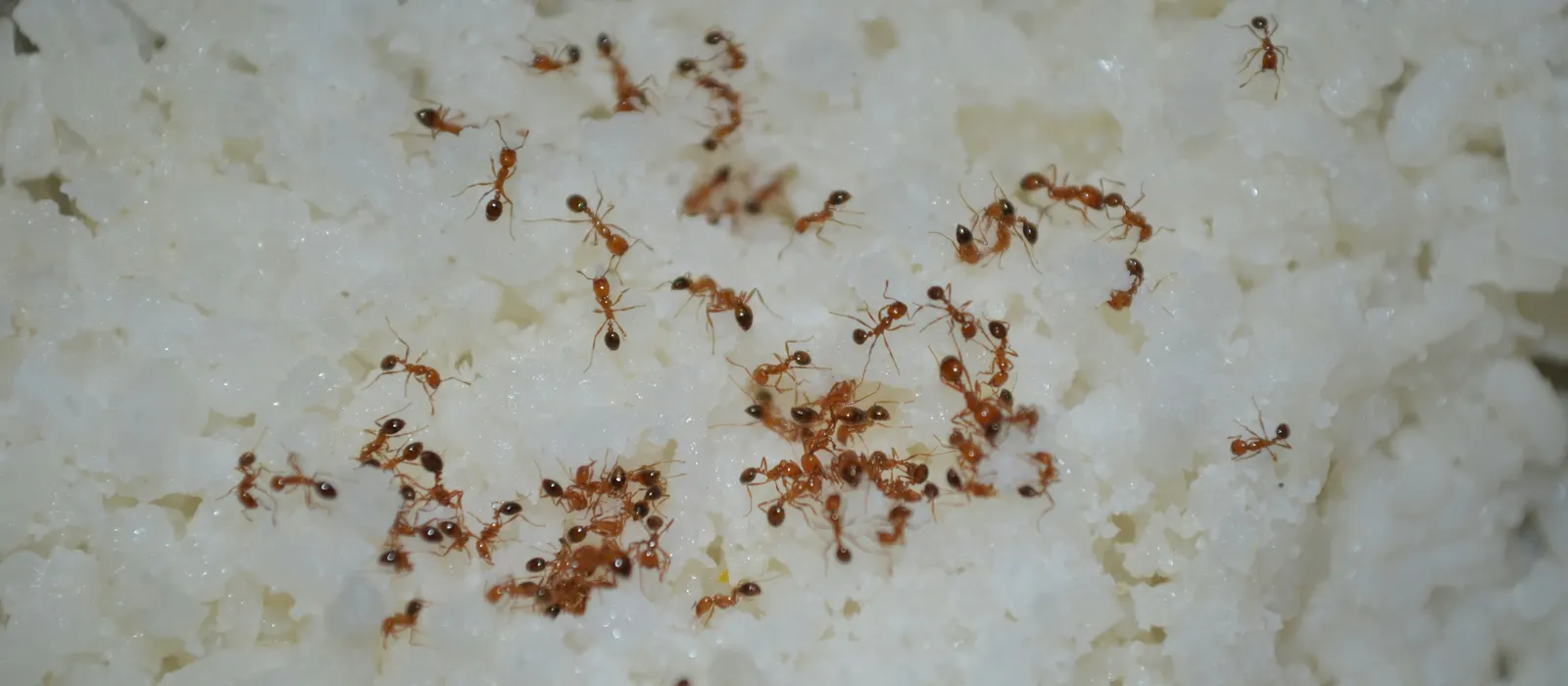
Each of these is its own job. German roaches are a kitchen problem that spreads through a building. American roaches are a drain and exterior problem that wanders indoors. Ants are a moisture and food problem with a colony somewhere outside, and bed bugs are a bed problem that rides in luggage and used furniture. The spray from the hardware store treats none of them.
Need an exterminator? Call 000-000-0000
German roaches
Small, tan, with two dark stripes behind the head, and found in kitchens and bathrooms: behind the refrigerator, under the sink, in the hinge of the cabinet door, inside the microwave clock. They arrive in boxes, grocery bags and used appliances and multiply fast in a warm kitchen. In an apartment or a condo they move between units through the plumbing chases, so the units on either side get treated too.
The treatment is gel bait placed where they feed and hide, an insect growth regulator so the egg cases fail, and a follow-up visit or two. Repellent sprays scatter them and keep the bait from working; a company that fogs a kitchen for German roaches is selling the next visit.
American roaches and the big ones
The large reddish-brown roaches, the palmetto bugs, live outside in mulch, palm boots, sewers and storm drains, and come inside through a dry floor drain, a gap under a door or a tree touching the roof. One or two indoors is a sealing problem; many is a drain or a crawl-space problem. The treatment is outside: granular bait in the mulch and the ground cover, a perimeter treatment, the drains flushed and the P-traps filled, the door sweeps replaced.
Ants
Ghost ants, the tiny pale ones on the kitchen counter, and big-headed ants, the ones trailing along the slab edge and nesting under pavers, are the common house ants around the bay. Both have colonies with many queens, so a spray that kills the workers on the counter leaves the colony to bud into several. Baits carried back to the nest work; the technician matches the bait to what the ants are eating that week.
Fire ants are a yard problem: mounds in the lawn, the flower bed and along the sidewalk, and a sting that raises a pustule. A broadcast bait across the yard in spring and fall, with individual mound treatments for the ones near the door and the play area, is the usual program. Carpenter ants, the large black ones, nest in wet wood and point to a leak.
- Ghost ants and big-headed ants: baits matched to what they are feeding on, plus the moisture fix
- Fire ants: broadcast bait over the yard, mound treatments near the house
- Carpenter ants: find the wet wood, fix the leak, treat the nest
- Any ant: trim what touches the house, seal the slab edge and the window frames
Bed bugs
Bed bugs come home from a trip, a rental, a used couch or a neighbor's unit. The signs are small blood spots on the sheets, dark specks along the mattress seam and the box spring, and bites in a line. They are not a dirty-house problem and they do not spread disease, but they spread through a building fast if the first unit is treated badly.
A licensed company inspects first and treats with heat, with a residual product in the seams and cracks, or with both, over two or three visits. Encasements go on the mattress and box spring. Throwing the bed out without treating the room moves the bugs into the hallway. Bagging clothing and running it through a hot dryer is your part.
One-time treatment or a plan
A specific event, a nest, an infestation from a move, a bed bug introduction, is a one-time job with its follow-ups. General pests around the bay come back without an exterior treatment on a schedule, which is why quarterly and bimonthly plans exist. Before signing a plan, ask what it covers, what it excludes (termites and bed bugs usually), and what cancelling takes.